
How Businesses Should Use AI Safely - A Practical Guide for 2026
Artificial intelligence is transforming the way businesses operate. From drafting emails and generating reports to designing buildings and reviewing legal contracts, AI tools are becoming embedded in daily workflows across every sector. But while the productivity gains are real, most businesses are adopting AI without any formal governance, and that is a serious problem.
The uncomfortable truth is that many AI platforms use your inputs to train their models. That means every prompt, every pasted document, and every uploaded file could become part of a dataset used to improve the service, and potentially be surfaced in responses to other users. If your team is pasting client data, financial forecasts, or proprietary code into AI tools without thinking twice, your business could already be exposed.
Your Prompts Are Training Data
Most popular AI tools, including free tiers of ChatGPT, Google Gemini, and others, explicitly state in their terms of service that user inputs may be used to improve their models. This means that anything you type into the prompt box could be retained, analysed, and incorporated into the AI's training data.
For casual personal use, this is unlikely to cause harm. But in a business context, the implications are significant. Consider what employees might be entering into AI tools on a daily basis:
- Customer names, email addresses, and account details
- Internal financial data, revenue figures, and forecasts
- Proprietary source code or product specifications
- HR records, disciplinary notes, or salary information
- Legal documents, contracts, and case files
- Strategic plans, board minutes, or M&A discussions
Once this data enters an AI system, you lose control over it. There is no "undo" button, and in most cases, no way to request deletion of specific training data. The data may persist in the model indefinitely.
Real-World Examples of AI Data Leaks
This is not a theoretical risk. In 2023, Samsung engineers accidentally leaked proprietary semiconductor source code by pasting it into ChatGPT for debugging assistance. The company subsequently banned the use of generative AI tools across the organisation. Similarly, law firms have faced scrutiny after submitting confidential case details into AI platforms for contract review and legal research.
These incidents highlight a critical point: the risk does not come from the AI itself being malicious. It comes from employees using powerful tools without understanding how their data is handled behind the scenes.
Which Industries Are Adopting AI - and Where the Risks Are Greatest
AI adoption is accelerating across virtually every sector, each with its own set of benefits and risks:
Architecture and Construction
Architects are increasingly using AI for generative design, creating building layouts optimised for energy efficiency, natural light, and structural integrity. AI tools can produce dozens of design variations in minutes, a process that would take human designers weeks. However, uploading proprietary building designs, client specifications, and structural data into AI platforms raises serious intellectual property concerns.
Legal Services
Law firms are using AI to review contracts, summarise case law, and draft legal documents. While this dramatically reduces the time spent on routine tasks, the sensitivity of legal data makes unmonitored AI use particularly dangerous. Client privilege could be compromised if confidential case details are processed by third-party AI services.
Finance and Accounting
Financial services firms are using AI for fraud detection, risk assessment, and automated reporting. The data involved, including transaction records, client portfolios, and regulatory filings, is among the most sensitive in any industry.
Healthcare
AI is being used to assist with diagnostics, patient triage, and medical research. The potential benefits are enormous, but so are the regulatory requirements around patient data. Using AI tools that are not compliant with data protection regulations like UK GDPR could result in significant fines and reputational damage.
Marketing and Creative
Marketing teams are among the heaviest users of AI, generating copy, social media content, images, and campaign strategies. While the data sensitivity may be lower, brand guidelines, unpublished campaign strategies, and customer segmentation data still need protection.
The Hidden Risk of Unmonitored AI Use
Perhaps the biggest risk facing businesses today is not AI itself, but "Shadow AI", the unmonitored, unauthorised use of AI tools by employees. Just as "Shadow IT" described employees using unapproved software and cloud services, Shadow AI refers to staff members using free AI tools without the knowledge or approval of IT leadership.
Need Reliable IT Support for Your Business?
Our managed IT support services keep your systems secure, monitored, and running efficiently.
A recent survey found that over 70% of employees who use AI at work do so without their employer's explicit approval. They are using personal accounts on free AI platforms, bypassing corporate security controls, and making decisions based on AI-generated outputs that have not been verified.
The risks of Shadow AI include:
- Data exposure - Sensitive company data being sent to third-party AI platforms without encryption or contractual data protection agreements
- Hallucinated outputs - AI tools can generate plausible-sounding but completely incorrect information. If employees trust these outputs without verification, it can lead to flawed business decisions, inaccurate reports, or even legal liability
- Compliance violations - Using AI tools that do not comply with GDPR, industry regulations, or client contractual obligations
- Inconsistent quality - Without standardised AI workflows, different employees may produce wildly inconsistent outputs
- Intellectual property risks - AI-generated content may inadvertently reproduce copyrighted material, creating legal exposure
Creating an Internal AI Usage Policy
Every business that allows or plans to allow AI usage should have a formal AI usage policy. This does not need to be a hundred-page document. A clear, practical policy that employees can actually follow is far more effective than an overly complex one that gets ignored.
A good AI usage policy should cover:
1. Approved Tools
Specify which AI tools are approved for business use. This might include enterprise versions of ChatGPT (which offer data privacy guarantees), Microsoft Copilot, or industry-specific AI platforms. Make it clear that unapproved tools should not be used for work purposes.
2. Data Classification
Define what types of data can and cannot be entered into AI tools. A simple traffic-light system works well:
- Green - Public information, general knowledge queries, non-sensitive content generation
- Amber - Internal business data that is not client-specific. May be used with approved enterprise AI tools only
- Red - Client data, personal information, financial records, legal documents, proprietary IP. Never to be entered into any AI tool without explicit approval
3. Prohibited Inputs
Be explicit about what should never be pasted into an AI prompt: customer personal data, passwords, API keys, source code, confidential contracts, employee records, or any data subject to regulatory protection.
4. Review and Verification
Require that all AI-generated outputs used in business decisions, client communications, or published content must be reviewed and verified by a qualified human before use. AI should augment human judgement, not replace it.
5. Training and Awareness
Include AI awareness in your staff training programme. Employees need to understand not just the rules, but the reasons behind them. When people understand why data protection matters in the context of AI, they are far more likely to follow the policy.
Practical Steps to Use AI Safely
Beyond having a policy, there are concrete technical and operational steps every business should take:
- Use enterprise AI instances - Enterprise versions of AI tools typically include contractual guarantees that your data will not be used for model training. Microsoft 365 Copilot, ChatGPT Enterprise, and Google Workspace AI all offer these protections
- Audit tool terms and conditions - Before adopting any AI tool, have someone review the data handling clauses in the terms of service. Pay particular attention to data retention, training data usage, and sub-processor arrangements
- Implement technical controls - Consider using web filtering or endpoint management to block access to unapproved AI platforms on company devices
- Monitor usage patterns - Use your existing security tools to monitor for unusual data transfers or access to AI platforms. This does not mean spying on employees, it means having visibility into potential data exposure
- Regular policy reviews - The AI landscape is evolving rapidly. Review and update your AI usage policy at least quarterly to account for new tools, new risks, and new regulations
- Consider data loss prevention (DLP) - DLP tools can detect and prevent sensitive data from being copied into web-based AI platforms, providing an automated safety net
How IT-MSP Can Help
At IT-MSP, we help businesses across London and the UK implement practical AI governance frameworks that protect sensitive data without stifling innovation. Our cybersecurity services include AI risk assessments, policy development, and technical controls to prevent data leakage through AI platforms.
Our managed IT support team can help you deploy enterprise AI tools securely, configure data loss prevention policies, and train your staff on safe AI usage practices. We believe AI should be embraced, but with the right guardrails in place.
Whether you are just starting to think about AI governance or need to tighten controls after an incident, we are here to help. Get in touch to discuss how we can support your business.
Frequently Asked Questions
Looking for proactive IT support instead of reactive fixes?
Speak to our team today and discover how IT-MSP can transform your business technology.
Other Articles
Cyber Essentials Explained: A Plain-English Guide for UK Businesses (2026)
Cyber Essentials in plain English: what it is, the five controls, the difference between Cyber Essentials and Plus, what it costs, and how UK businesses get certified in 2026.

How to Spot Today's Cyber Scams: Token Hijacking, AI Voice Clones, WhatsApp Takeovers and More
AI has made scams harder to spot than ever. Here's how to recognise Microsoft 365 token hijacking, phishing, AI-powered fraud, WhatsApp hijacking and voice-clone calls - and the simple habits that stop them.
Windows 10 End of Life: What UK Businesses Must Do Now
Windows 10 reached end of support on 14 October 2025. Businesses still running it are now exposed to unpatched vulnerabilities, compliance failures, and unsupported software. Here is what you need to do.

Employee Monitoring Tools: Do You Use Them?
Employee monitoring tools help UK businesses protect sensitive data, meet compliance requirements, and manage remote work security. Learn how to implement monitoring proportionately and lawfully with ICO-compliant best practices.
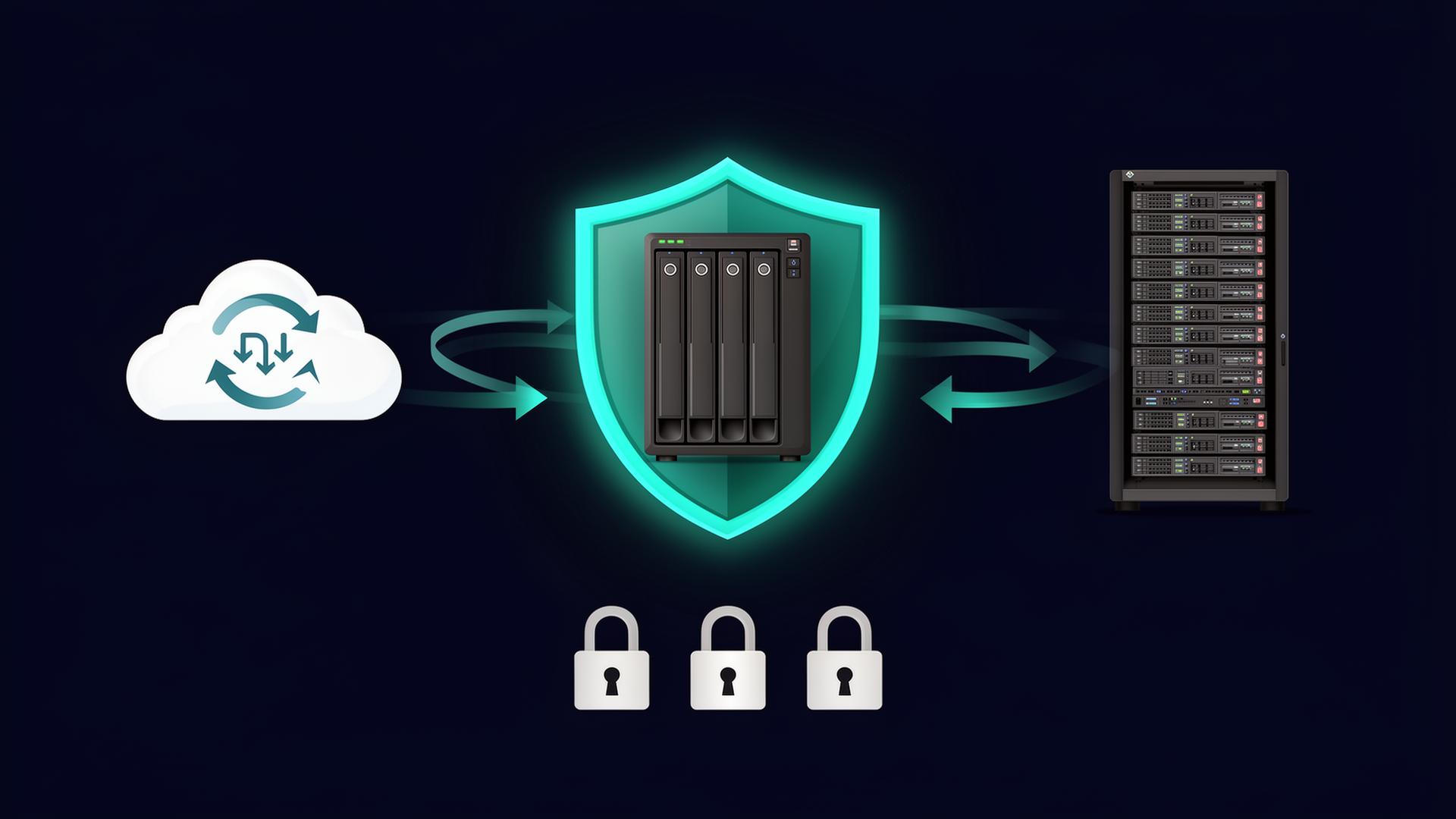
Internal Backups Done Right: How Small Businesses Can Protect Their Data Without Exposing Themselves
Many small businesses invest in backups but unknowingly introduce serious security risks. Learn how to properly secure your NAS-based backups and protect your data without exposing your business.

Why Every UK Business Needs Managed IT Support in 2026
Discover why managed IT support is essential for UK businesses in 2026. Learn about proactive monitoring, cost savings, and how to choose the right IT partner.

Microsoft 365 vs Google Workspace: Which Is Right for Your Business?
Compare Microsoft 365 and Google Workspace across collaboration, security, pricing, and features to find the best productivity platform for your UK business.

Top 10 Cybersecurity Threats Facing Small Businesses This Year
Learn about the top 10 cybersecurity threats targeting small businesses in 2026, from AI-powered phishing to ransomware, and how to protect your organisation.

How to Choose the Right IT Support Partner for Your Business
Learn how to evaluate and choose the right IT support partner for your business. Discover key factors, red flags, and essential questions to ask providers.

The Complete Guide to Business Backup and Disaster Recovery
Learn everything about business backup and disaster recovery, including RPO/RTO, the 3-2-1 rule, cloud vs local backup, and how to test your recovery plan.